Château de Martragny: the story of a characterful campsite in the heart of the Bessin
A family campsite rooted in the Norman landscape
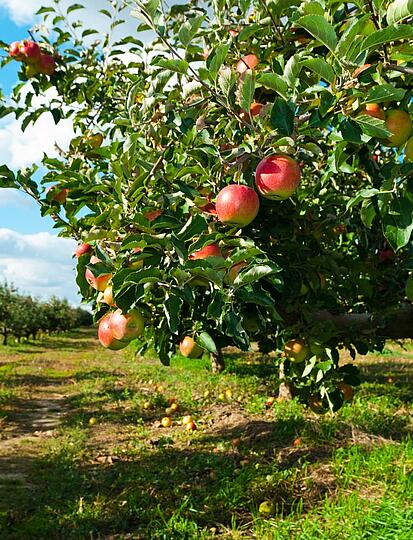
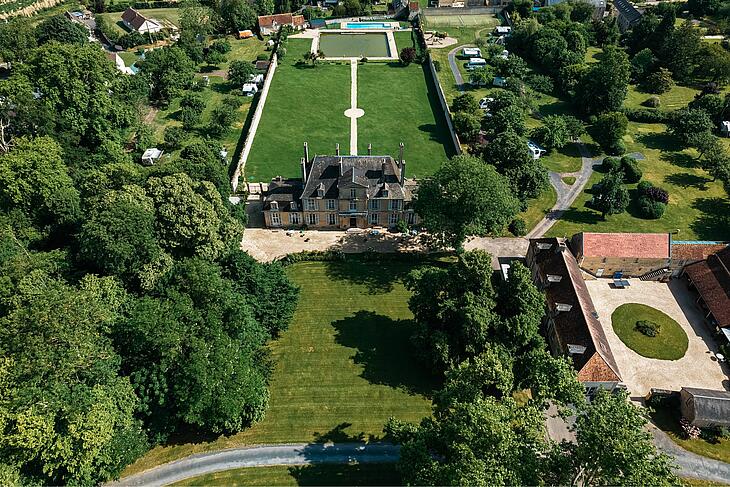
The Martragny campsite is deeply connected to the landscapes of the Bessin. Here, there are no mobile homes or rows of chalets. The estate has chosen to remain a traditional campsite, true to the original spirit of outdoor holidays. Spacious pitches are carefully integrated into a preserved natural environment of grassy ground, orchards, bocage hedgerows and dry-stone walls.
Peace and quiet are part of the site’s identity. Guests come to Martragny to recharge, to enjoy the swimming pool, to share time with family, to read beneath the trees or to stroll through the grounds. A tennis court, relaxing swims and tastings of pommeau and Calvados on the bar terrace — overlooking the square-shaped outbuildings typical of Bessin architecture — complete this gentle, welcoming atmosphere.
An 18th-century residence and a way of life
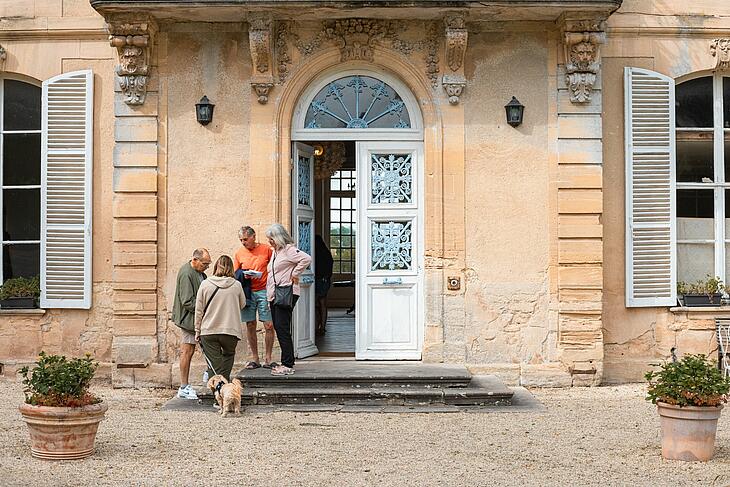
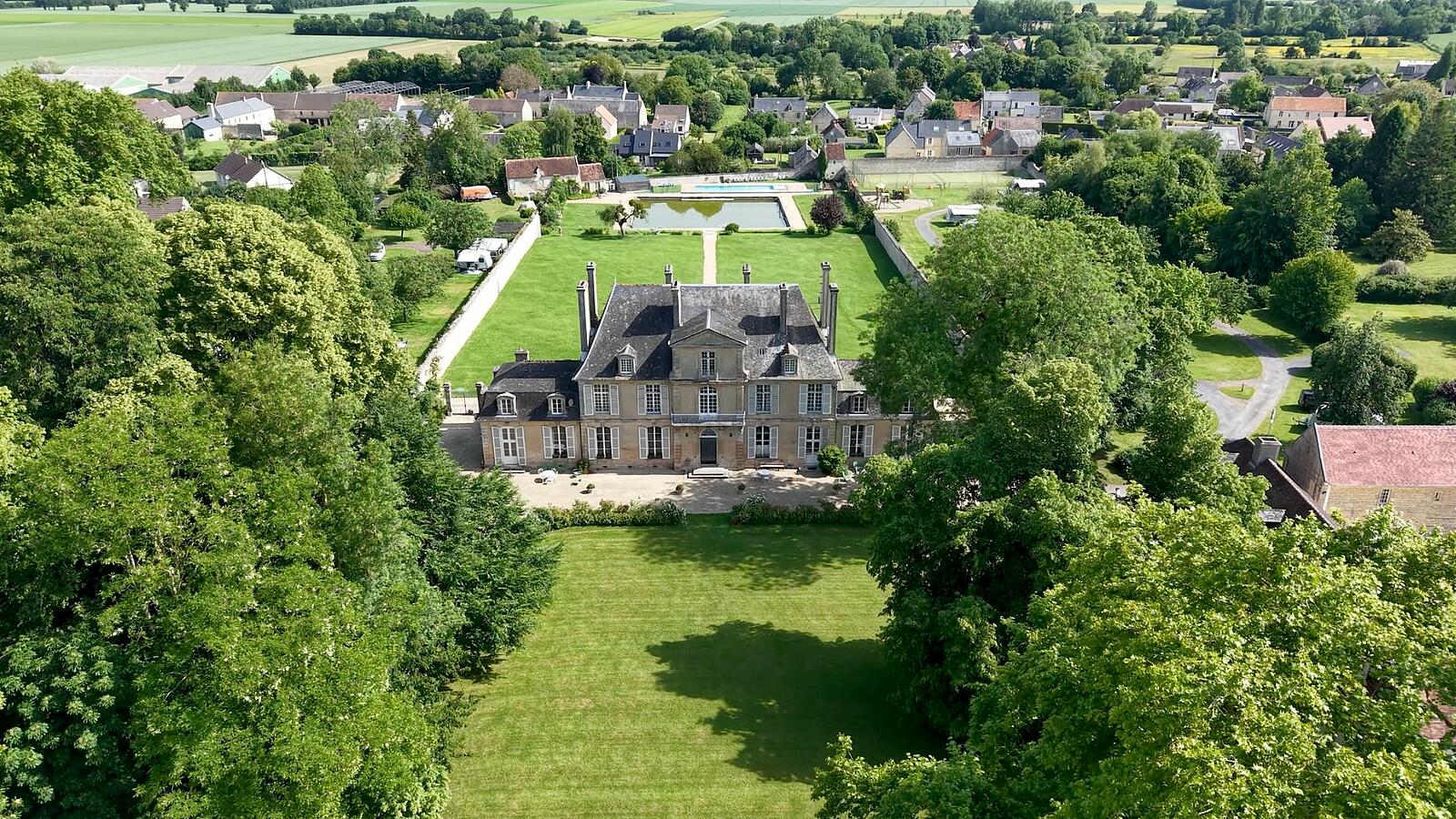
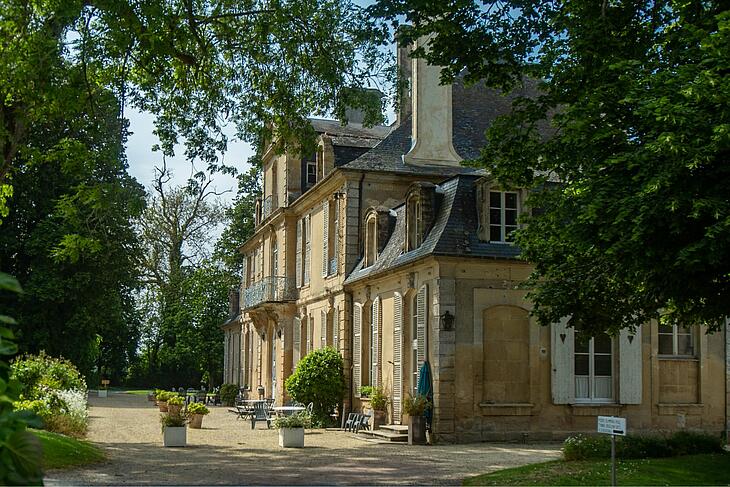
The château itself was built in 1747 by the Marquis de Grangues. At just 21 years old, having inherited a building in very poor condition, he undertook its complete reconstruction. From this period remains a certain idea of happiness: an elegant yet simple residence, open to nature and designed for comfort and tranquillity.
Inside, period fireplaces, family furniture and carefully selected antique pieces give the château a timeless, slightly nostalgic charm. Nothing ostentatious — simply an understated elegance that reflects the spirit of the Bessin.
The bicentennial park, planted with trees and flowers, features a mirror-like pond which, at certain hours of the day, reflects the curves of the château. It is a setting made for quiet walks, private conversations and moments of peaceful contemplation.
The French Revolution and an early spirit of freedom
During the French Revolution, the château was occupied by the aristocratic Cyresme family. A tangible trace of their presence remains today. During the construction of the “new bar” in the spring of 1991, a wooden plaque bearing the name “de Cyresme” was discovered. It is now displayed in the main entrance hall of the château.
Another remarkable relic from this time is the bell still fixed to the château’s façade. Inside, an inscription reads:
“I was named the Hummingbird by Mr de Cyresme, lord of no land but citizen of the world.”
An unexpectedly modern statement, reflecting a philosophical ideal of freedom that seemed to anticipate the Revolution itself.
From château to working farm: the 19th century
In the 19th century, the estate changed hands and purpose. The de Mons family became the new owners and converted the château into a working farm. It served simultaneously as a residence, a grain store and even an annex for poultry farming. The outbuildings — where the campsite shop and showers are now located — were used as stables and cowsheds.
This period, marked by intensive agricultural use, led to the significant deterioration of the buildings, worn down by time and function.
A school in exile during the First World War
In September 1918, the château experienced one of its most unusual chapters. Fearing a German invasion near Ypres, the headmaster of Saint-Stanislas College in Poperinge, Belgium, sent 119 pupils and 28 teachers to take refuge at Martragny.
Wooden barracks were built in front of the outbuildings to house them, while the château’s bedrooms and reception rooms were transformed into classrooms. For an entire year, the château became an improvised school, bringing life and purpose back within its walls.
The Second World War: occupation and lasting traces
In 1939, the château was briefly occupied by British forces, who considered establishing an airfield on the property, even if that meant demolishing the estate. The plan was abandoned with the arrival of German troops.
The German army then requisitioned the château, using it as an infirmary. To this day, German graffiti can still be found on some bedroom doors — discreet but powerful reminders of this turbulent period.
From farm to campsite: a gradual revival
After the war, in 1956, the Buon family, farmers from Creully, purchased the château. They resumed agricultural activity and undertook major interior restoration works, including floors, ceilings and staircases.
In 1973, the estate was taken over by the de St Victor family, who transformed the park into a campsite, which became part of the Castel Camping & Caravaning network and quickly attracted many visitors.
In 1989, Mr and Mrs de St Victor retired, and the property was taken over by the Buretel de Chassey family. The campsite facilities required extensive renovation — sanitation, electricity, swimming pool and kitchen all needed modernising. In 1993–1994, the barns were converted into a reception hall for winter events and into a bar and restaurant during the summer season.
A living heritage, open to today’s travellers
Today, Château de Martragny offers several types of accommodation: camping pitches, gîtes, guest rooms, canvas cabins, as well as the hire of lounges and reception rooms.
Perfectly located for exploring Normandy — from the Bayeux Tapestry and the D-Day landing beaches to Arromanches, Omaha Beach, Caen, Deauville and even Mont-Saint-Michel — the estate continues to welcome campers, families, weddings and private gatherings, as well as festive evenings.
More than a family property, Château de Martragny is a living part of the Bessin’s heritage, preserved through the passion and dedication of generations. A place that has weathered the centuries without losing its soul — and that still offers today a rare luxury: a return to a carefree sense of time, for a weekend or longer, with family or friends.